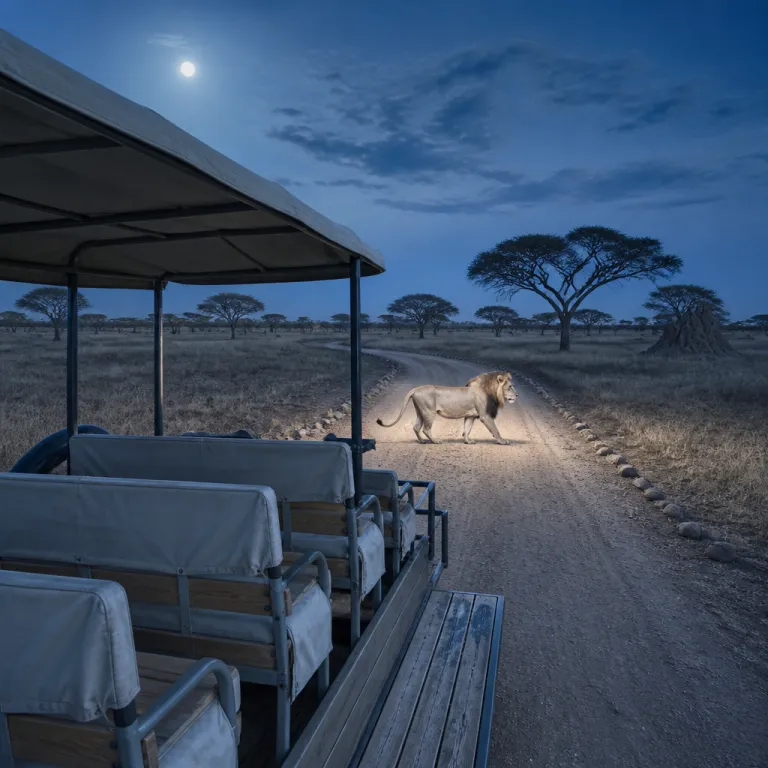
Hwange after dark: why the real safari begins when lights go out
The Hwange night safari experience begins when the dining tent empties and engines purr quietly outside. As you climb into the open 4x4, the park feels transformed into a parallel world where every rustle hints at wildlife and every shadow might hold a predator on the move. This is the hour when a carefully planned Zimbabwe safari shifts from scenic daytime game viewing to a more intimate encounter shaped by sound, scent and darkness.
Hwange National Park covers more than 14 600 square kilometres, and at night that vast national wilderness feels almost limitless. Under Zimbabwe Parks and Wildlife Management Authority regulations, only private concession areas that border the national park are allowed to offer night drives, so your choice of safari lodge or camp directly shapes the depth of your Hwange night safari experience. Within these private concession zones, such as the Linkwasha, Makalolo and Ngamo concessions, guides can leave the main roads, follow fresh tracks and deliver game drives that feel more like a guided tour through a living laboratory than a scripted outing.
Predators are more active at night, and that simple fact underpins every serious night drive. Lions patrol waterholes, hyena hunting packs test the edges of elephant herds, and a leopard on the move may slip along the same sand track your vehicle used during the day. Guests who only book daytime game drives in Hwange see a fraction of this wildlife behaviour, while those who add two or three duration days of night drives gain a layered understanding of how the park really works.
For solo travellers, the Hwange night safari experience offers something rare in a busy national park. Vehicles in high end camps usually carry fewer guests, which means more space, more silence and more direct access to the guide’s expertise. When you are not competing with a full row of cameras, you are free to ask detailed questions about each sighting and to savour the stillness between encounters.
Where to stay: lodges and camps that are licensed for night drives
Not every lodge in Hwange can legally offer a night drive, so your booking choices matter. Properties inside the core Hwange National Park are limited to daytime game drives, while camps on adjacent private concession land can run night drives and walking safaris under strict protocols. When you compare safari lodge options on a luxury booking platform, look carefully for wording that confirms both night drives and guided walking safaris are included in the stay.
High end camps in the eastern and northern sectors of Hwange often sit near pumped waterholes that attract large elephant herds in the dry months. From these bases, your Hwange night safari experience might begin with a quiet wait at the edge of a pan, watching silhouettes of elephants drink before the vehicle eases away to follow the sound of hyenas or the alarm calls of antelope. Well known Hwange private concession night drives at Linkwasha, Makalolo and Ngamo often combine this waterhole time with slow loops through teak forest and open plains, giving you a mix of close up encounters and wide angle nocturnal scenes.
Resorts and hotels around Victoria Falls town can be tempting for their pools and river views, but they do not offer direct access to Hwange’s night drives. A smart approach is to spend a day in Victoria Falls at a property designed for downtime between game drives, then transfer by road to a Hwange camp that specialises in nocturnal safaris. You can explore curated options for a resort in Zimbabwe that is built for rest between game drives on this guide to properties designed for downtime between game drives.
Some itineraries link Hwange with Mana Pools and even Cape Town, but you should understand the different rules that shape each park. Mana Pools National Park does not permit night drives inside the park, so your after dark wildlife viewing there will focus on camp based sightings and the sounds of the bush rather than vehicle based safaris. In contrast, Hwange’s concession model allows lodges to offer structured night drives that complement daytime game drives and walking safaris, giving your overall Zimbabwe safari a richer rhythm.
What you actually see: from leopard patrols to aardvark and honey badger
The headline promise of any Hwange night safari experience is predators, and that promise is usually kept. Lions on the move, hyenas trotting in loose formation and the occasional leopard slipping between acacia shadows are all part of the nocturnal game. Yet the real magic often lies in the smaller wildlife that only appears once the last Victoria daylight has drained from the sky.
Aardvark, honey badger and serval are classic Hwange night drive prizes, and they reward guests who are patient and quiet. Porcupine families shuffle along the verges, genets flick their ringed tails above the grass, and springhares bounce away like animated punctuation marks at the edge of the spotlight. On some drives, guides use thermal imaging to pick up heat signatures beyond the beam, turning the Hwange night safari experience into a kind of high tech treasure hunt that still respects the animals’ space.
Guides in Hwange are trained to a high standard, and their spotlight technique is as important as their tracking skills. They sweep the beam slowly, avoid shining directly into the eyes of resting wildlife and switch to a red filter when following predators for more than a brief view. If you want to understand why Zimbabwe still trains better safari guides than many neighbours, read this analysis of guide training and booking decisions before you choose your lodge.
Compared with Mana Pools, where the focus is on daylight walking safaris and canoe based game viewing, Hwange’s night drives feel like a complementary chapter in a broader safari experience. A multi park Zimbabwe safari that links Hwange, Mana Pools and Victoria Falls allows you to see how different national park regulations shape wildlife behaviour and guest access. In Hwange’s private concession areas, the combination of night drives, walking safaris and daytime game drives offers a rare level of flexibility for serious wildlife photography and in depth observation.
How night drives work: timing, safety and the art of the spotlight
Most Hwange camps structure the Hwange night safari experience around dinner, when temperatures drop and predators begin to move. Vehicles usually leave camp shortly after dessert, with a planned duration of two to three hours that balances wildlife viewing with a reasonable return time. This rhythm lets you enjoy a full day of game drives and still have energy for the night drive without feeling rushed.
Night drives use open 4x4 vehicles equipped with powerful spotlights and often a second handheld light for the tracker. The guide controls the main beam, sweeping it across the bush to catch the eye shine of wildlife while the tracker scans closer to the road for fresh tracks or movement. Tools such as binoculars and, in some camps, thermal imaging devices help locate animals without overusing the spotlight, which keeps the safari experience respectful and low impact.
Safety protocols are strict, and reputable lodges work closely with park authorities to maintain standards. Guests remain seated at all times, the vehicle never approaches wildlife too closely, and the guide will reposition rather than push an animal that shows signs of stress. As one standard answer from the expert dataset puts it, “Are night drives safe? Yes, when conducted by experienced guides.”
Only private concession areas bordering Hwange National Park are authorised to offer night drives, which means your lodge choice determines whether you can join these outings. National park regulations prohibit night drives in the core public areas, just as Mana Pools National Park restricts vehicle movement after dark to protect sensitive habitats. When you plan a multi day Zimbabwe safari, build at least two nights in a Hwange private concession camp into your duration days if nocturnal wildlife is a priority.
Planning your Hwange night safari: best time, gear and itinerary design
For most travellers, the best time for a Hwange night safari experience is the long dry season from about May to October, when wildlife concentrates around waterholes. Clear skies, cool nights and thinning vegetation make it easier to spot predators and smaller nocturnal wildlife along the roads. In the transitional months around Nov Dec, storms can bring dramatic skies and electric sunsets, but they also scatter game more widely across the park.
Pack for cold conditions, because an open vehicle at night in Hwange can feel far cooler than the daytime temperature suggests. Wear layers, including a windproof outer shell, a warm mid layer and a scarf or buff to seal the gaps around your neck. Gloves and a beanie are not excessive, especially on longer night drives that leave camp late and return close to midnight.
Photographers should adjust expectations and gear for low light conditions, because a night drive is not a studio. A fast lens in the f/2.8–f/4 range, high ISO capability around ISO 3200–6400 and image stabilisation help, but the real skill lies in knowing when to put the camera down and simply watch the game unfold. Guides will often pause the vehicle and angle the spotlight to give you a free view of the subject without harsh glare, yet the most memorable images may be the ones you keep only in your head.
Many travellers pair Hwange with Victoria Falls, using the falls as a soft landing before heading into the bush. A detailed Victoria Falls map for luxury travel, such as the one in this planning guide to planning your stay with a Victoria Falls map, helps you choose a property that fits neatly with road transfers to Hwange. From there, you can extend your Zimbabwe safari to Mana Pools or even onward to Cape Town, building an itinerary that moves from river to national park to city without losing the thread of wildlife and landscape.
FAQ
What animals can be seen during night drives in Hwange ?
Night drives in Hwange often reveal lions, leopards and hyenas as they become more active after dark. Guests also have a chance to see smaller nocturnal wildlife such as aardvark, honey badger, serval, porcupine and genet that rarely appear on daytime game drives. The exact sightings vary by season and luck, but predators and specialised night creatures are the main focus.
Are night drives in Hwange safe for solo travellers ?
Night drives are considered safe when operated by licensed lodges that use experienced guides and follow strict protocols. Vehicles are open but secure, guests remain seated and guides maintain respectful distances from wildlife while reading animal behaviour carefully. Solo travellers often benefit from smaller vehicles and more guide attention, which can make the Hwange night safari experience feel both personal and reassuring.
What should I bring on a Hwange night drive ?
Warm clothing is essential, including layered tops, a windproof jacket and possibly a hat and gloves for colder months. A small flashlight or headlamp helps around camp, while insect repellent keeps mosquitoes at bay during stops. If you plan to photograph wildlife, bring a camera that handles low light well and be prepared to balance shooting with simply enjoying the sightings.
Can I do night drives inside Hwange National Park without staying in a lodge ?
Independent night drives are not allowed inside Hwange National Park, and only guests of authorised lodges in private concession areas can join guided outings. Public self drive visitors must return to designated camps before dark and cannot use spotlights or drive after gate closing times. To experience night drives, you need to book a safari lodge or camp that is licensed for nocturnal safaris.
How do Hwange night drives compare with Mana Pools or Victoria Falls activities ?
Hwange’s night drives focus on vehicle based predator encounters and specialised nocturnal wildlife, using spotlights and sometimes thermal imaging. Mana Pools National Park does not permit night drives, so its strength lies in daytime walking safaris and canoe based game viewing along the Zambezi River. Victoria Falls offers a different kind of experience again, with activities centred on the waterfall, river cruises and scenic tours rather than traditional game drives.