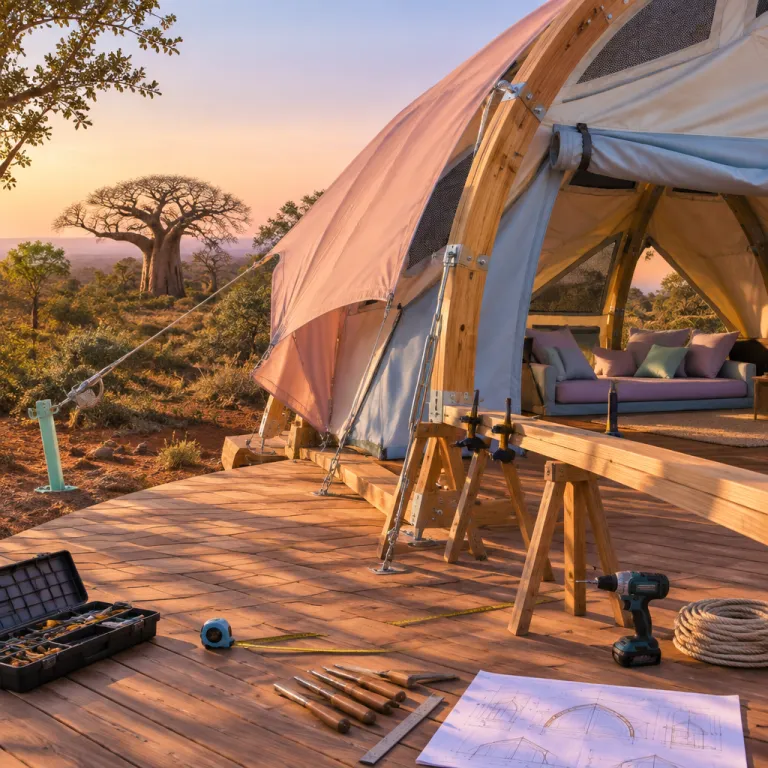
Luxury tented camp Zimbabwe design as quiet engineering
Luxury tented camp Zimbabwe design starts with climate, not décor. The best safari camp architects in Zimbabwe work backwards from heat, wind and light to shape every panel of canvas, every timber deck and every opening towards the bush. A well considered luxury safari tent in a remote national park feels effortless, but its structure is a precise response to temperature swings, prevailing breezes and the movement of game.
Across Hwange National Park, Mana Pools and the lower Zambezi wilderness, serious safari camps use elevated decks to lift you above damp ground while keeping you close to the sounds of the night. These raised platforms allow cool air to move under the tented floors, while deep verandas and fly sheets create shade that rivals any permanent lodge built in stone. In the best safari lodges, semi open walls and mesh panels are placed to pull air through the space, so ceiling fans and solar powered systems work with the climate, not against it.
Plumbing is another quiet triumph of luxury tented camp Zimbabwe design, especially in remote safari Zimbabwe concessions where there is no grid. Gravity fed showers, discreetly insulated pipes and efficient hot water systems mean you step from a game drive into a powerful shower without diesel generators humming nearby. In the most refined lodges camps along the Zambezi River or near Hwange National, solar arrays and battery banks are hidden behind screens, so your tented safari lodge suite feels serene, while the engineering quietly delivers comfort that rivals any city hotel.
Canvas versus walls: why couples choose tents over a permanent lodge
Many first time visitors to a safari lodge in Zimbabwe still assume that a tent is a downgrade from a permanent lodge. The reality in the top safari camps is the opposite, especially for couples who value atmosphere, privacy and a sense of theatre in their luxury safari. In Hwange, Mana Pools and along the Zambezi, the most sought after safari camp suites are often under canvas, precisely because they blur the line between lodge comfort and wilderness immersion.
Think of the contrast this way ; a permanent lodge in a national park offers thick walls, air conditioning and perhaps slightly more acoustic separation from the bush. A luxury tented camp Zimbabwe design leans into the thinness of the canvas wall, using layered fabrics, insulated roofs and thoughtful orientation so you hear lions calling across the river while still sleeping under high thread count linen. For many couples, that sensory connection is the point of a Zimbabwe safari, and it is why they will choose a tented safari lodge over a concrete room at Victoria Falls every time.
When you compare safari lodges, look at how each camp handles privacy and layout rather than just the word tent. The best safari properties in Hwange National Park or near Bumi Hills use generous spacing between tents, private plunge pools and screened outdoor showers to create a cocoon for two. If you are flying between safari camps by charter, use a specialist guide to routes such as the time saving charter flights between Zimbabwe’s safari camps, which makes it easy to pair a canvas camp in Hwange with a more permanent lodge above Lake Kariba or a design forward property near Victoria Falls.
The sensory case for canvas in Hwange, Mana Pools and along the Zambezi
What sets a luxury tented camp Zimbabwe design apart is not only the structure, but the way it edits what you hear, smell and see. Canvas filters the bush rather than blocking it, so dawn arrives as a soft glow through the tent walls, with francolins calling and elephants moving past the hide near camp. In Hwange and Mana Pools, where game densities are high, that closeness to wildlife turns an ordinary night into a private theatre of sound.
On the Zambezi River, safari camps often face channels where hippos grunt all night and carmine bee eaters nest in the banks. Here, semi open tents with roll up sides let you lie in bed and watch the river change colour, while gauze screens keep insects out and ceiling fans stir the air. When you stay at a safari camp near Mana Pools, you might wake to wild dogs trotting past your deck, or to elephants feeding in the albida trees between tents and the national park floodplain.
Game drives and walking safaris feel different when your base is canvas rather than concrete, because you never fully step away from the wilderness. After an evening game drive in Hwange National, you return to a pool lit by lanterns, the scent of dust and woodsmoke hanging in the air. For couples, that sensory layering is often the best safari luxury of all, and it is why many repeat guests choose lodges camps that keep them close to the sounds of the bush, whether they are near Victoria Falls, on the shores of Bumi Hills or timing their trip for the shoulder season described in this guide to September in Zimbabwe.
Low impact, high ethics: reversibility as a design principle
One of the strongest arguments for luxury tented camp Zimbabwe design is reversibility, the ability to remove a camp and leave almost no trace. In sensitive areas of Mana Pools National Park or private concessions bordering Hwange, serious safari lodges use light footings, timber decks and modular structures that can be dismantled without scarring the soil. This low impact approach aligns with conservation priorities, especially in river systems and fragile floodplains along the Zambezi River.
Mobile safari camps take this even further, operating as seasonal or semi permanent setups that follow game movements and rainfall. A mobile camp in a remote corner of Hwange National might stand for only a few months, with tents, pools and dining areas packed away before the first storms, leaving grass to reclaim the site. For travellers, this means you can enjoy a luxury safari with hot showers, excellent food and attentive service, while knowing that your presence in the park is as light as the canvas above your head.
Some of the most respected names in safari Zimbabwe, from the riverside elegance of Tembo Plains to the hilltop drama of Bumi Hills or the sculptural stonework of Singita Pamushana, balance permanent lodge elements with tented suites or satellite safari camps. This mix allows them to anchor operations in a durable core while using canvas to reach wilder corners of their concessions. When you book through a platform that understands Zimbabwe safari ethics, you can filter for camps that prioritise low impact design, whether you are choosing a simple safari camp in Hwange or a high design tented suite overlooking the Zambezi wilderness.
How to read the design: spotting serious camps when you book
From a distance, many properties call themselves safari camps, but not all are created equal. When you look closely at luxury tented camp Zimbabwe design, the details reveal whether you are seeing a thoughtful response to climate and landscape or a glamping gimmick. Start with the plan of the lodge ; serious safari lodges in Hwange, Mana Pools and along the Zambezi River will show generous spacing between tents, clear views to game rich areas and logical routes to the main deck, pools and fire pits.
Next, examine how the camp talks about game drives and walking safaris, because guiding and design are deeply linked in Zimbabwe. A well designed safari camp will mention hides overlooking waterholes, shaded decks that catch breezes after hot drives and pathways that keep you safe when elephants wander through. Properties that focus only on interior décor without referencing the surrounding national park, river or wildlife corridors are often less serious about the full safari experience.
Finally, consider how the camp fits into your wider Zimbabwe safari route, especially if you are pairing Victoria Falls with Hwange National Park or flying between remote lodges camps. A strong itinerary might combine a canvas heavy camp in Hwange with a more permanent lodge at Bumi Hills or a stone and thatch masterpiece like Singita Pamushana, giving you both tented intimacy and architectural drama. If you want to add a design focused stay near the falls, this guide to an elegant journey to Victoria Falls Bridge for luxury hotel guests is a useful starting point for understanding how river views, spray zone proximity and access to activities shape the feel of each lodge.
FAQ
Are luxury tented camps in Zimbabwe as comfortable as lodges ?
Top tier luxury tented camps in Zimbabwe match or exceed the comfort of many permanent lodges. You can expect proper beds, high quality linens, full bathrooms with hot water and often private plunge pools. The main difference is the canvas structure, which brings you closer to the bush while still delivering a high level of service and amenities.
Which areas in Zimbabwe are best for tented safari camps ?
Hwange National Park, Mana Pools National Park and the Zambezi River corridor host many of the country’s most respected tented safari camps. Hwange offers excellent game drives and large elephant herds, while Mana Pools is renowned for walking safaris and canoeing. Along the Zambezi, riverside camps combine strong wildlife viewing with atmospheric views and cooler breezes.
How safe is it to sleep under canvas in big game areas ?
Reputable safari camps in Zimbabwe are designed and operated with strict safety protocols. Tents are placed with clear sight lines, pathways are monitored and trained guides escort guests after dark in areas with dangerous game. Canvas walls may feel thin, but the real safety comes from experienced staff, good camp layout and sensible guest behaviour.
Should couples choose a tented camp or a permanent lodge for a romantic trip ?
For many couples, a tented camp offers a more romantic atmosphere than a permanent lodge, thanks to the sounds of the bush and the sense of seclusion. If you value design, privacy and immersion in nature, a well spaced tented camp with private decks and outdoor showers is ideal. Travellers who prefer more acoustic separation and hotel like corridors may feel more comfortable in a solid walled lodge.
How many nights should I spend in one tented camp in Zimbabwe ?
Three nights is usually the minimum to appreciate a tented camp fully, because it gives you time for several game drives and at least one walking safari. Many experienced travellers stay four or five nights in a single camp, especially in wildlife rich areas like Hwange or Mana Pools. Longer stays reduce travel fatigue and allow you to settle into the rhythm of the bush and the design of the camp.