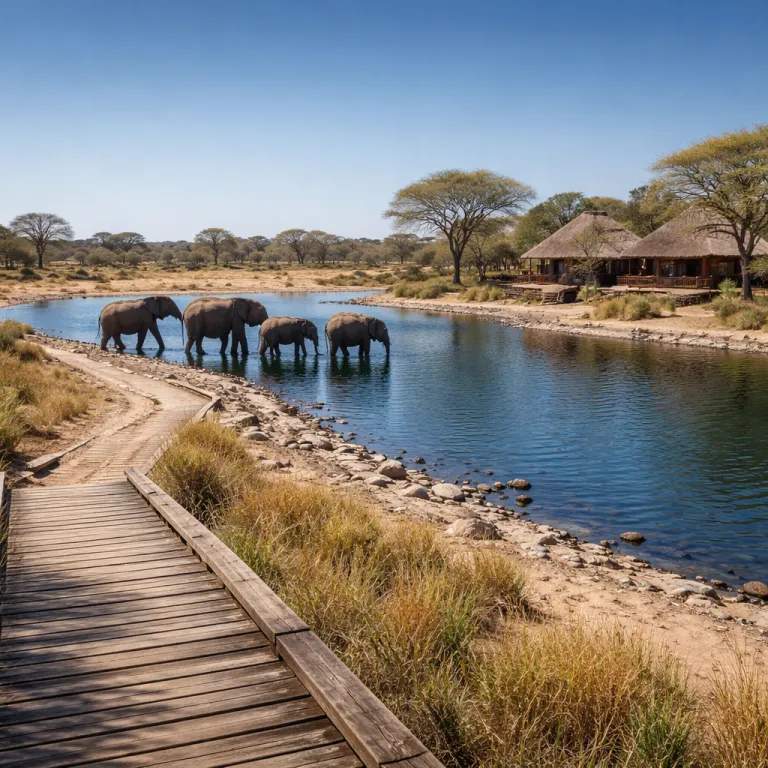
Hwange anti-poaching tourism as a new luxury benchmark
Hwange anti-poaching tourism has become a quiet revolution in Zimbabwe’s high-end safari scene. In Hwange National Park, where an estimated 40 000 elephants roam across roughly 14 650 square kilometres, recent monitoring reports from the Zimbabwe Parks and Wildlife Management Authority (ZimParks) and partners indicate no recorded elephant poaching since 2021, a trend widely linked to sustainable tourism revenue and focused conservation work. ZimParks’ own wildlife census summaries and joint monitoring reports with conservation NGOs attribute this stability to a combination of increased ranger presence, better intelligence networks and consistent funding from tourism levies and concession fees.
This corner of Zimbabwe now sits at the centre of Africa’s conservation conversation, because Hwange holds one of the continent’s largest elephant populations and a dense mix of other wildlife inside the park. ZimParks, supported by Friends of Hwange Trust and the Conservation and Wildlife Fund, manages a vast national park where private safari operators lease concessions and run safari lodges that channel money into anti-poaching patrols, water and wildlife infrastructure and community development projects. For luxury guests, Hwange’s conservation-focused safari model means your chosen camp is part of a financial ecosystem that pays rangers, fuels vehicles, drills boreholes and supports local communities living along the park edge.
On the ground, Hwange national concessions are patrolled by mixed teams from ZimParks, private operators and specialist units such as the Cobras Anti-Poaching Unit, which focus on snaring and illegal hunting. In some sectors, a single joint unit of 10–15 rangers can log more than 250 patrol hours a month on foot and by vehicle, protecting elephants, rhinos where present, and other wildlife while monitoring water points that keep animals alive through the long dry season. As one senior ZimParks warden notes, “Every full camp means more boots on the ground, more fuel in patrol vehicles and more eyes watching over Hwange’s wildlife.” Anti-poaching work here is not an abstract conservation slogan; it is a daily, labour-intensive activity that conservation-driven tourism quietly underwrites every time a guest checks into one of the region’s lodges or safari camps.
Who pays for protection on Hwange’s private concessions
The financial engine of Hwange’s protection model starts with concession fees that safari lodges pay to ZimParks for the right to operate inside the national park. On many Hwange national concessions, operators then add per person conservation levies and bed night levies, which are ring-fenced for anti-poaching patrols, water and wildlife management and community development in nearby local villages. For example, a camp might charge a US$25 per person per night conservation levy: over a seven-night stay, a solo traveller could contribute US$175, enough to cover several full days of ranger salaries, fuel for game drives that double as patrols, and maintenance of solar pumps that keep elephants and other wildlife at key pans. At a 12-bed camp running at high occupancy, that same levy structure can generate more than US$100 000 a year for field operations and community projects.
Imvelo Safari Lodges has become one of the clearest examples of this model, with properties such as Jozibanini Camp in the remote south of the park and other Hwange safari lodges that openly publish their conservation and community figures. At Jozibanini Camp, a tiny six-bed operation deep in Hwange wildlife country, each guest night helps fund the Cobras Anti-Poaching Unit, which patrols former poaching hotspots and monitors community rhino initiatives beyond the park boundary. In a recent season, Imvelo reported that guest levies and donations helped fund more than 1 000 patrol days and several new boreholes in surrounding communal lands. When you read about Somalisa and other Hwange properties in detailed reviews such as this guide to Somalisa Camp in the heart of Hwange’s wild elegance, you are also reading a ledger of how luxury safaris can pay for boots on the ground.
Across Hwange, Friends of Hwange Trust and the Conservation and Wildlife Fund work alongside local communities and local people to stretch every tourism dollar, filling gaps when donor funding dips or when government budgets tighten. The Zimbabwe Parks and Wildlife Management Authority remains the legal custodian of the national park, but in practical terms many anti-poaching patrols, vehicle purchases and ranger rations are financed by private safari operators and their guests. One Conservation and Wildlife Fund coordinator summarises it simply: “Without tourism levies, we would have fewer rangers in the field, fewer functioning vehicles and far less capacity to respond to threats.” In this context, Hwange’s conservation tourism is not a marketing label; it is a partnership where government, NGOs and lodges share the cost of keeping elephants, rhinos and other wildlife alive in one of Africa’s most pressured ecosystems.
From your booking to ranger hours, and the gaps that remain
For travellers comparing Hwange with South Africa or other African safari destinations, the most useful question is how clearly a camp can show the link between your invoice and its conservation impact. On some Hwange national concessions, operators such as Imvelo Safari Lodges and other transparent safari lodges publish the exact conservation levy per person per night, then report how many ranger days, community rhino monitoring patrols or local community projects those funds supported. A typical weeklong stay for one guest at a high-end camp can underwrite several days of dedicated anti-poaching unit patrols, plus contributions to school fees or boreholes in local villages that reduce pressure on the park. Some operators now include annual impact reports in pre-arrival information, detailing total levy receipts, kilometres patrolled and the number of households reached by community programmes.
Not every Hwange camp is equally transparent, and travellers should ask direct questions about rhino conservation, community development and how local communities are represented in governance structures. Some concessions operate almost as private sanctuary zones, where rhinos or other sensitive wildlife are monitored closely and where the link between tourism revenue and field operations is clean and well documented. Others rely more heavily on external donor funding, which can make it harder to trace how much of your luxury safari spend actually reaches the rangers who walk the park boundary at night. When in doubt, ask for specific figures: how many rangers are employed, how many patrol hours are logged each month and what percentage of your nightly rate or levy is allocated to conservation and community work.
Even with no recorded elephant poaching in recent years, Hwange still faces snaring, human–wildlife conflict and displacement issues on its fringes, where community members, local people and wildlife compete for land and water. Anti-poaching units can remove snares and arrest poachers, but they cannot on their own resolve the economic pressures that drive illegal hunting outside the national park, especially in areas far from the main safaris circuit between Hwange and Victoria Falls. Before you book, use planning resources such as this guide to the best time to visit Zimbabwe for luxury stays and safaris, then ask each camp how your stay supports local communities, funds game drives that double as patrols and contributes to long-term security for Hwange wildlife. The most credible operators will be able to show how their conservation and community investments align with ZimParks’ management plans and independent monitoring reports.
How luxury travellers can engage directly with Hwange’s anti-poaching work
Hwange anti-poaching tourism is not only about passive funding; many camps now invite guests to engage with conservation and community projects in structured, respectful ways. According to local conservation partners, “How can tourists participate in anti-poaching efforts? By joining guided patrols and educational programs.” At select Hwange safari lodges, guests can spend a morning with a poaching unit, visit a community rhino awareness project or join workshops in nearby local villages that explain how community development and wildlife protection are linked. These experiences are usually capped at small group sizes to minimise disruption and are designed in consultation with ZimParks and community leaders.
During the dry season, when elephants and other wildlife concentrate around pumped pans, some camps schedule game drives that deliberately pass through high-risk zones, turning a standard safari into a visible deterrent. Imvelo safari guides at properties such as Jozibanini Camp often combine these drives with visits to water installations, giving guests a clear sense of how their stay keeps pumps running and patrol vehicles fuelled. For solo travellers, this level of access offers rare insight into how Hwange national conservation really works, far beyond the usual sundowner narrative. Guests who wish to deepen their involvement can often support specific projects, from sponsoring a month of ranger rations to funding a community borehole or classroom refurbishment.
Safety remains a common question, and local authorities are clear that “Is it safe to visit Hwange National Park? Yes, with adherence to park guidelines and regulations.” Guests who respect park rules, follow guide instructions on foot and in vehicles, and support lodges that invest in training and equipment, contribute to a virtuous circle of safety and professionalism. ZimParks’ incident records show that serious visitor safety issues are rare when accredited guides and established operators are used. For a broader view of how Hwange connects with the rest of Zimbabwe’s luxury circuit, including the spray-drenched lodges near the falls, consult this insider guide to Victoria Falls luxury stays before finalising your itinerary.
What Hwange’s wildlife means for your safari expectations
Hwange’s scale and wildlife density shape the kind of safari you can expect, especially if you are used to smaller reserves in South Africa. Travellers often ask, “What wildlife can be seen in Hwange? Elephants, lions, buffaloes, and various bird species.” In reality, the park offers far more, with seasonal movements of plains game, predators and migratory birds that make each game drive different from the last. ZimParks aerial surveys and long-term monitoring projects have documented large herds of sable and roan antelope, healthy lion and wild dog populations, and more than 400 recorded bird species across different habitats.
Hwange wildlife viewing is particularly intense in the late dry season, when artificial water points draw elephants in their thousands to pans scattered across the national park. Many safari lodges position hides and decks near these pans, allowing guests to watch elephants, buffalo and other wildlife for hours without moving the vehicle. This concentration of animals also makes anti-poaching patrols more complex, because rangers must cover vast distances between pans while monitoring snaring hotspots and responding to reports from local communities. In some busy sectors, joint patrol teams can travel more than 1 000 kilometres a month, checking water installations, investigating gunshots and removing wire snares.
For travellers focused on rhino conservation, it is important to understand that Hwange itself is not yet a major rhino sanctuary, although community rhino projects and translocation discussions continue elsewhere in Zimbabwe. Some Hwange operators support rhino conservation work in other regions, using funds from conservation levies and guest donations to back projects beyond the park boundary. If rhinos are a priority for your trip, ask your chosen camp which rhino projects they support, how your stay contributes and whether they can arrange extensions to dedicated rhino areas elsewhere in the country. This approach allows you to enjoy Hwange’s vast elephant herds and predator sightings while still making a measurable contribution to rhino security and broader anti-poaching efforts nationwide.